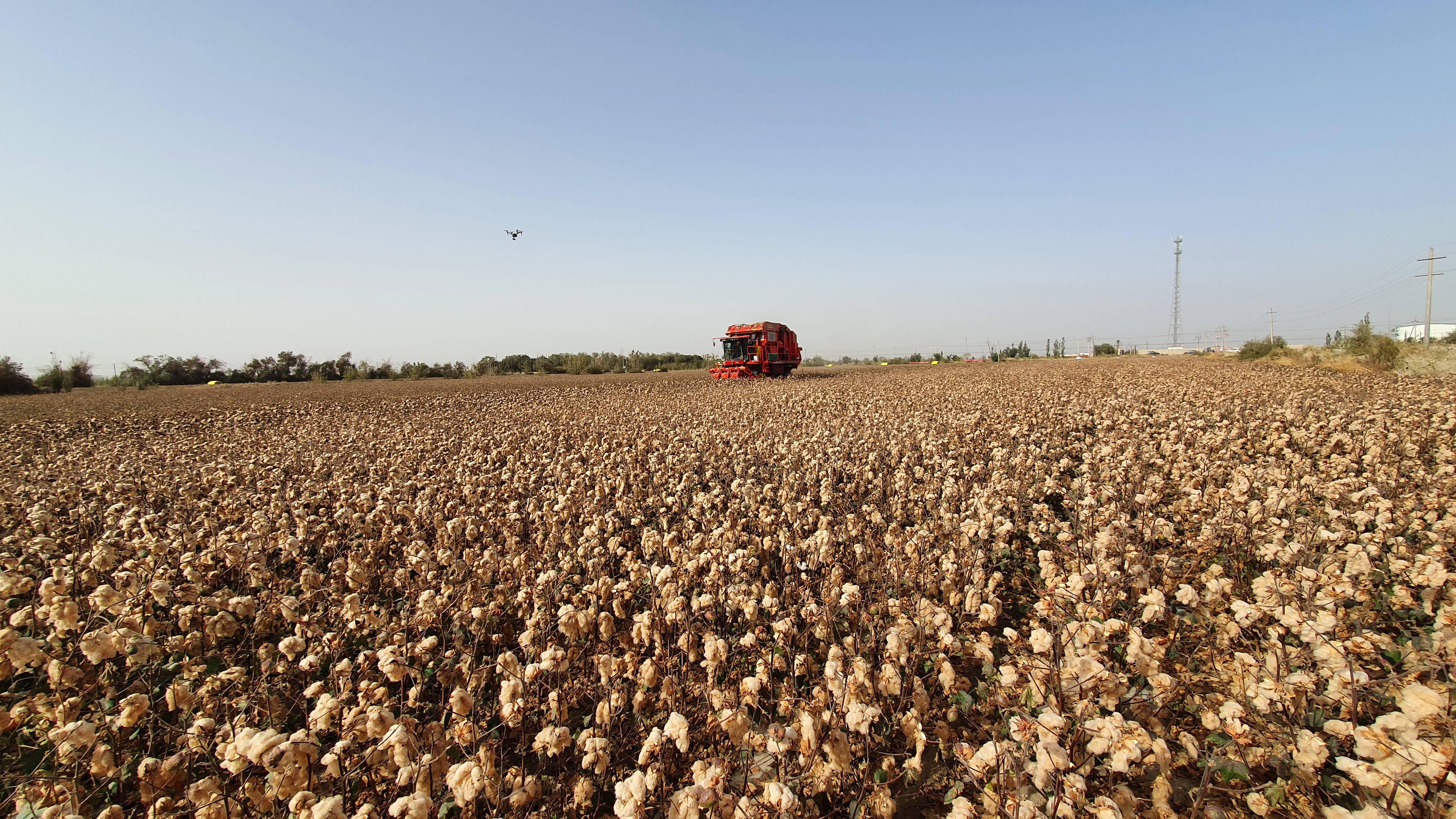
Your Cotton, Grown to Order
Most cotton suppliers sell commodity stock. We grow yours. Through our Contract Farming program, we allocate dedicated planting acreage in China’s premier cotton regions based on your exact requirements — variety, volume, and delivery schedule — before the growing season even begins.
Whether you need 500 kg of sample fiber for product development or 50 metric tons for seasonal production, your cotton is reserved from seed to shipment.
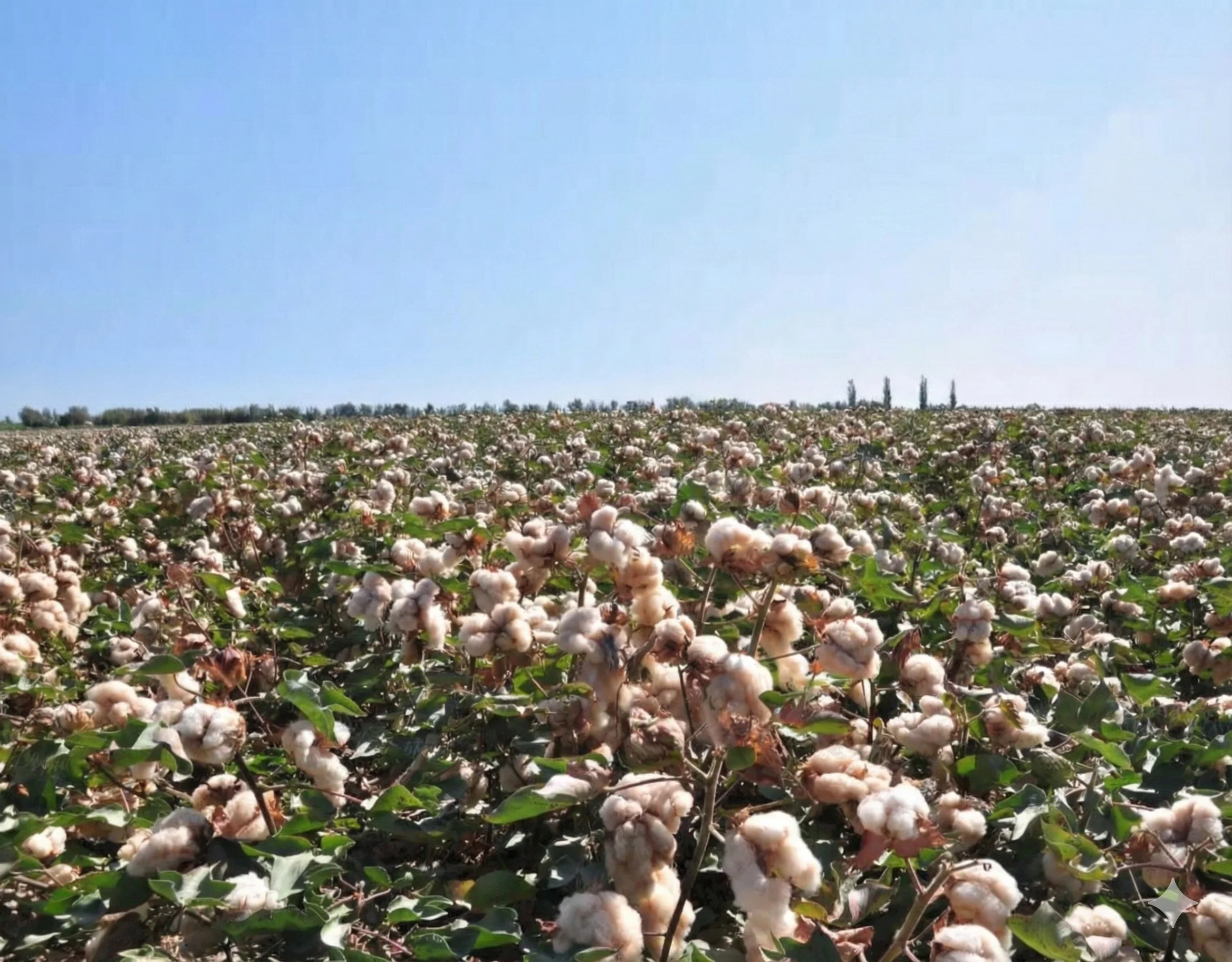
Why Xinjiang: The World’s Premier Cotton-Growing Latitude
Our primary growing region is Xinjiang, China — the source of over 90% of China’s cotton output and one of the most scientifically ideal cotton-growing environments on the planet. Xinjiang sits squarely on the 40°N Golden Cotton Belt, the same latitude band that hosts the world’s finest cotton regions: the Nile Delta (Egypt), the San Joaquin Valley (USA), and Uzbekistan’s Fergana Valley.
But Xinjiang offers a combination of natural advantages that few regions can match simultaneously:
Extraordinary Sunshine — 3,000+ Hours Per Year
Xinjiang receives between 2,550 and 3,500 hours of annual sunshine — among the highest of any agricultural region globally. This intense and sustained solar radiation drives exceptional photosynthesis, producing cotton fibers with higher natural density, stronger tensile strength, and — critically for colored cotton — richer, deeper natural pigmentation that holds its color through washing and wear.
Extended Frost-Free Growing Season — 180 to 220 Days
With over 180 frost-free days annually, Xinjiang’s growing season is long enough for cotton bolls to fully mature on the plant. This extended period allows fibers to reach their maximum staple length and strength before harvest — a critical factor in yarn quality and textile performance.
Extreme Day-Night Temperature Swing — 13–18°C Daily
The dramatic diurnal temperature variation in Xinjiang (often 13–18°C between daytime highs and nighttime lows) is one of its most valuable agricultural assets. During the day, high temperatures accelerate photosynthesis and carbohydrate production. At night, the sharp temperature drop slows the plant’s respiration, allowing those carbohydrates to be deposited directly into fiber cellulose. The result: denser, stronger fibers with better elasticity. For naturally colored cotton, this same mechanism intensifies pigment accumulation in the fiber matrix.
Arid Climate — Natural Pest Resistance
Xinjiang’s extremely dry climate (< 200mm annual rainfall in most cotton zones) creates an environment that is naturally inhospitable to most cotton pests and fungal diseases. This means less reliance on pesticides and a cleaner path to organic certification — a significant advantage for brands pursuing GOTS, OEKO-TEX, or EU organic standards.
Kashgar · Shache County: Where Our Colored Cotton Grows
Within Xinjiang, our primary colored cotton plantations are located in Shache County, Kashgar Prefecture — selected after extensive agronomic evaluation for its uniquely favorable microclimate and soil conditions.
Alkaline Sandy Soil — The naturally alkaline, sandy loam soils of Shache offer excellent root aeration and drainage. This soil structure allows colored cotton root systems to penetrate deeper, accessing minerals that directly influence fiber color intensity and consistency.
1.8 Billion Cubic Meters of Water Resources — Despite the arid climate, Shache County benefits from abundant surface runoff and Kunlun Mountain glacier meltwater, providing a stable and clean irrigation supply. This eliminates reliance on chemical-treated municipal water sources.
Accumulated Temperature 3,200–5,700°C — The total accumulated heat during the growing season ensures complete boll maturity and fiber development.
Modern Mechanized Farming — Xinjiang’s vast flat terrain supports large-scale BeiDou satellite-guided precision agriculture: GPS-navigated planting, drip irrigation, precision seeding, and integrated water-fertilizer management. This level of mechanization ensures quality consistency across harvests.
Gansu Province — Dunhuang Supplementary Origin
We also maintain supplementary growing operations in Dunhuang, Gansu Province, at the western end of the Hexi Corridor (1,200–1,300m elevation). Adjacent to the Qilian Mountains with pristine snowmelt irrigation, Dunhuang provides a secondary source of organic colored cotton with distinct highland fiber characteristics.
5,000 Years of Colored Cotton Heritage
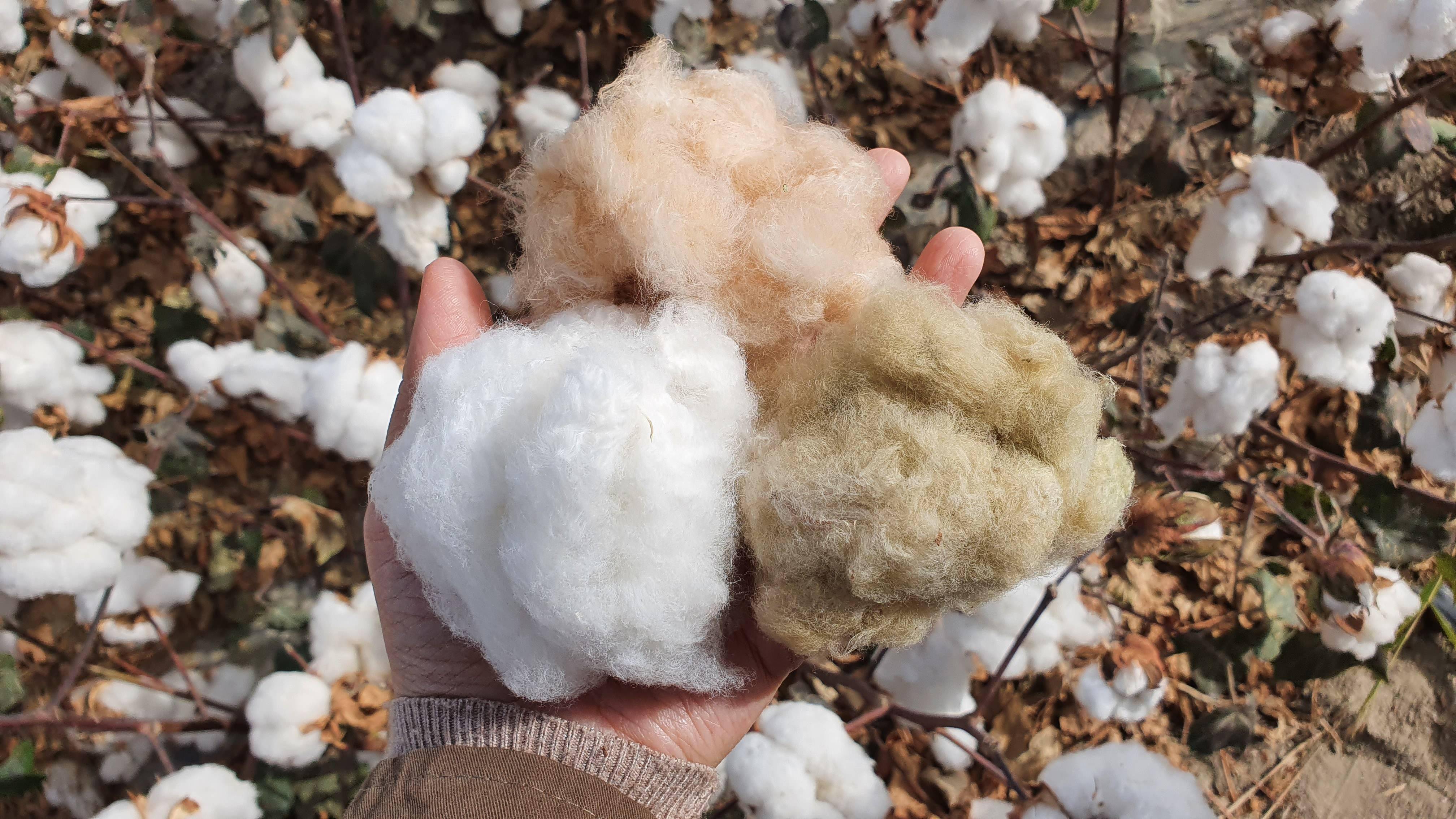
Naturally colored cotton is not a modern invention. Archaeological evidence traces its origins to over 5,000 years ago in the Andes Mountains of South America, where the Mochica civilization first cultivated brown, green, and cream cotton varieties along Peru’s northern coast — a tradition maintained for over 2,000 years.
Today, China’s Xinjiang and Gansu regions produce approximately 90% of the world’s naturally colored cotton, thanks to their exceptional growing conditions that coax the deepest pigment expression from these heritage varieties.
Contract Farming: How It Works
Our contract farming program gives you direct control over your raw material supply chain:
Guaranteed Volume — Dedicated acreage allocated before planting. No market competition for your supply.
Variety Selection — Choose from brown, green, or cream naturally colored cotton. Each variety has distinct fiber properties suited for different textile applications.
Price Lock — Agree on pricing before the season, insulating your production costs from commodity market volatility.
Full Traceability — Know the exact farm, field, and harvest date of every bale. Complete documentation for your sustainability reporting and customer transparency.
How Raw Cotton Sourcing Elevates Your Brand
Build an Unassailable Brand Narrative — “Farm-to-fabric” traceability from a single origin is the strongest story in sustainable fashion. Your customers can trace their garment back to a specific field in Xinjiang.
Unlock New Product Categories — Natural brown, green, and cream cotton fibers enable product lines that conventional dyed-cotton competitors simply cannot replicate without chemicals.
Command Premium Pricing — Traceable, chemical-free, naturally colored cotton supports 20–40% higher retail price points in sustainability-conscious markets across Europe, Japan, and North America.
Simplify Compliance — No dyes means no restricted substance concerns. Easier paths to OEKO-TEX Standard 100, GOTS, and EU REACH compliance.
Start Your Supply Partnership
Contact our sourcing team to discuss your volume requirements, preferred cotton varieties, and delivery timelines. We’ll design a supply program — from contract farming to spot stock — tailored to your production schedule.
MOQ: 500 kg per variety (sample quantities available)
Contract farming: Minimum 5 hectares dedicated acreage
Spot stock: Ships within 7 business days
Contract-grown: Delivery within one harvest cycle